
EV Charging
Melbourne's EV Charging Boom - Why the Zappi Is the Charger We Install Most
7 September 2026 · Updated 20 October 2026 · 8 min read · By Jasper Lindsay, A-Grade Electrician & Founder
EVs hit a quarter of Australian new-car sales in 2026. What that means for Melbourne home charging, why the solar-diverting myenergi Zappi has become our top seller, and what an install actually involves.
Electric cars stopped being a niche purchase in Australia this year. On the industry's own VFACTS sales data, fully electric vehicles took 22.3% of new light-vehicle sales in June 2026 - triple their share a year earlier - and by August the figure reached 24.9%, with EVs outselling every other powertrain for the month. Add plug-in hybrids and roughly one in three new cars now plugs in. We see the same curve from the driveway side: EV charger installation has gone from an occasional job to weekly work for us across Melbourne, from Brighton to Glen Waverley. And of everything we fit, one charger has quietly become our top seller: the myenergi Zappi.
Why the boom lands at home, not at the servo
Most Melbourne EV owners do the overwhelming majority of their charging in their own garage, overnight. Home charging on an off-peak or EV tariff costs a fraction of public fast charging, the car is simply full every morning, and there's no queueing behind a ute at a shopping-centre charger. So every EV that lands in a Melbourne driveway tends to bring a wallbox install with it - which is why charger demand is tracking car sales so closely.
Why the Zappi became our top seller
The Zappi is built by myenergi, a UK manufacturer that has been making home energy kit for over a decade, and it does something most chargers can't: it charges your car directly from your excess solar. Three modes cover the spread. FAST charges at full rate from whatever supply is available. ECO blends solar with a little grid top-up. And ECO+ - the mode that sells the unit - charges the car exclusively from surplus solar, ramping up and down as clouds pass, so the kilometres you add cost you nothing but sunshine your roof was otherwise exporting for a few cents.
In a city with as much rooftop solar as Melbourne, that changes the economics. A household exporting solar for a few cents a kWh and then buying it back at night to charge a car is going the long way around. A Zappi in ECO+ short-circuits the loop: the energy goes from your panels straight into your battery on wheels. If you're weighing up solar and an EV at the same time, designing the two together is exactly the kind of job we like.
The details that matter day to day
- Charges entirely from surplus solar in ECO+ mode - the signature feature, and the reason solar households ask for it by name
- Built-in load management via CT sensors, so a single-phase home can charge at full rate without tripping the main supply when the oven and heating peak
- Available in 7kW single-phase and 22kW three-phase versions, so it scales from a terrace to a three-phase rebuild
- The current model carries Wi-Fi and OCPP, so it plays nicely with energy retailer smart-charging programs rather than locking you in
- Works with any EV that uses a Type 2 connector - which in Australia is effectively all of them
Zappi, Tesla Wall Connector or Ocular?
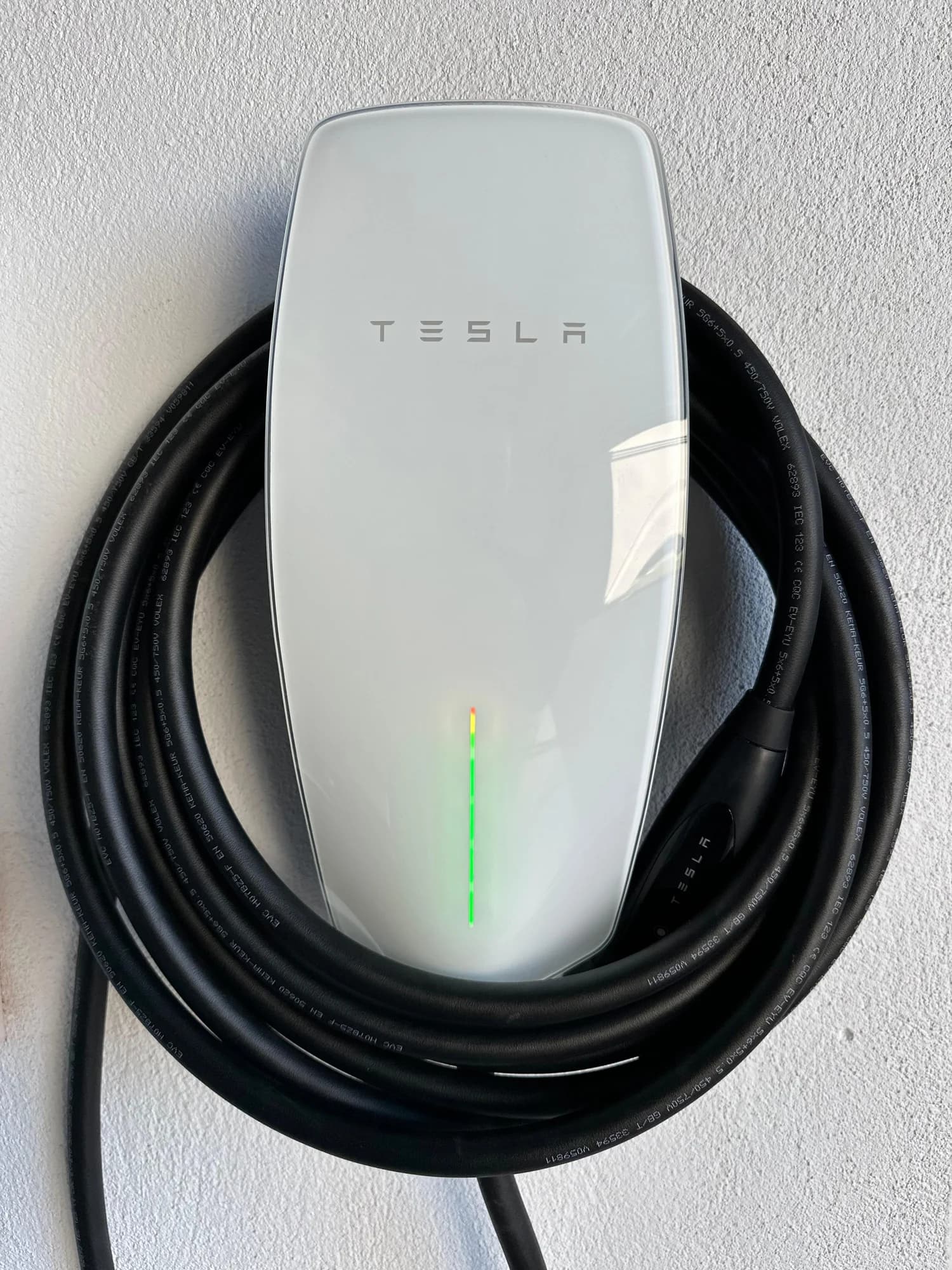
We install all three across Melbourne, and they genuinely suit different garages. The Tesla Wall Connector remains the pick for a Tesla-only household that wants the cleanest integration with the car's app and scheduling - it's a beautifully resolved unit, and we fit plenty of them. Ocular is the sharp-value pick when the budget is leading. The Zappi wins whenever rooftop solar is part of the picture, which in our suburbs is most of the time. We've compared the Tesla-versus-universal question in more depth in tesla wall connector vs type 2.
What a Zappi install involves
A straightforward installation is a single visit: a dedicated circuit from your switchboard to the charger, the CT sensor that lets the Zappi watch your household load and solar, mounting and commissioning, and a walkthrough of the modes before we leave. All-in - charger, circuit and commissioning - most Zappi setups we quote land between about $2,000 and $5,000, with where you land coming down to the cable run from switchboard to garage, whether the board has headroom, and single versus three-phase. Every quote we issue is fixed-price before work starts.
The most common complication isn't the charger - it's the switchboard. Many Melbourne homes still run boards with no spare ways and no RCD protection, and a charger needs both. We check this first and quote the electrical work honestly alongside the charger, so the board isn't a surprise mid-install.
Single-phase or three-phase?
For one EV and a typical commute, the 7kW single-phase Zappi with load management is the right answer - an overnight charge adds far more range than most people drive in a day. The 22kW three-phase version earns its place on rebuilds that already run three-phase power, households heading toward two EVs, and anyone pairing a large solar array with serious daytime charging. If you're not sure which side of that line you're on, our ev charging page covers the decision, or just ask - we'll quote both paths so you can compare real numbers.
The EV curve in the sales data isn't slowing, and charger installs follow it. If you're bringing an EV home this year - or your solar system is exporting energy you'd rather put in the car - contact us us for a fixed-price quote. Licensed A-Grade electricians, REC 37142, installing Zappi, Tesla Wall Connector and Ocular chargers across metropolitan Melbourne.
Talk to us
Get a Free Quote from Melbourne Power Group
Licensed electricians servicing every suburb across Melbourne. Free fixed-price quotes, typically back within 2 business hours. Call 0426 284 283 or use our contact form.
Get a Free Quote