
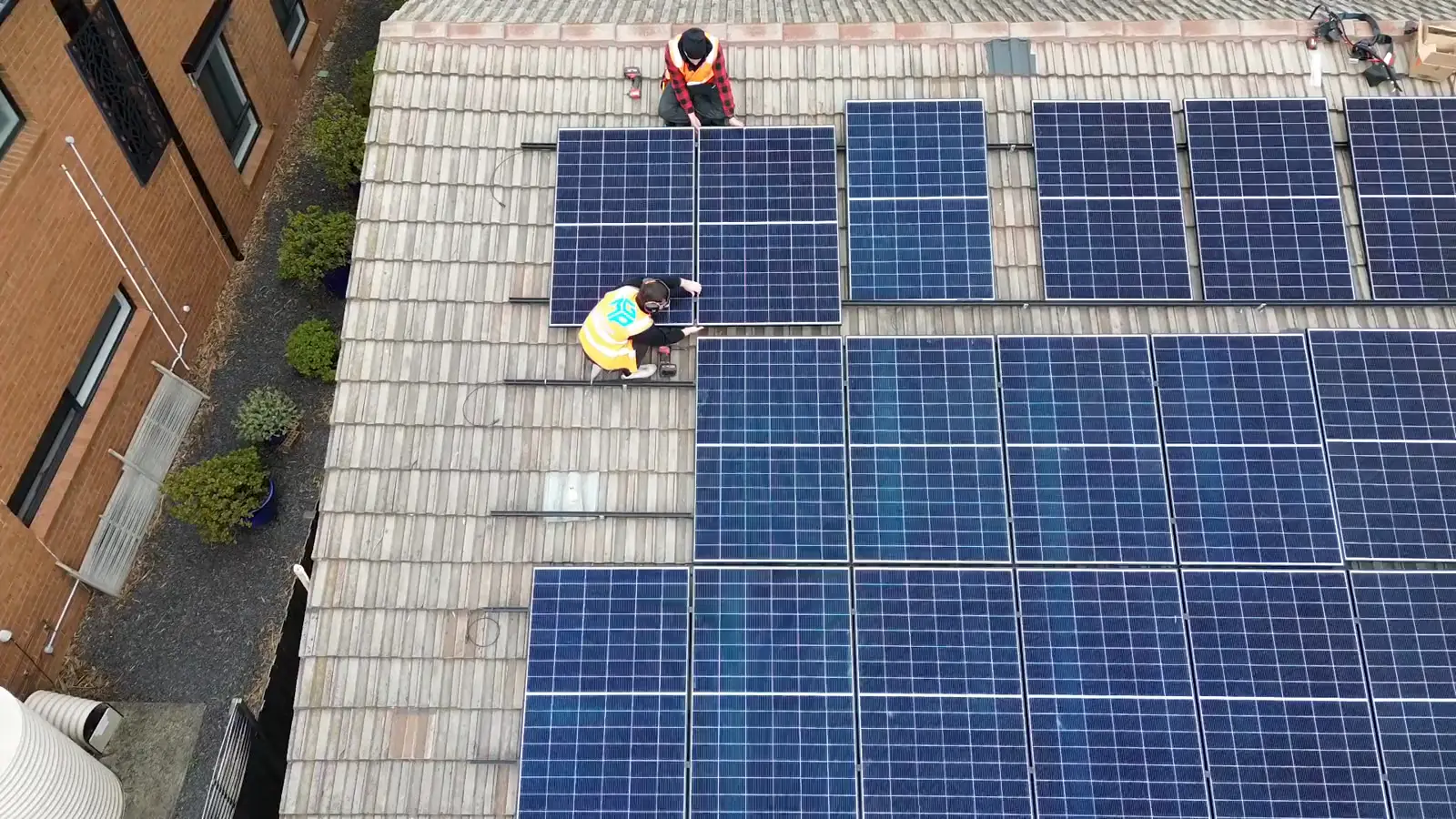

Solar Sized To What You Actually Use
Systems designed around your interval data, not your roof size. For Melbourne businesses, owners corporations and property managers looking to cut daytime consumption and peak demand charges.
Commercial solar works best where a business consumes what it generates, which is why daytime-trading premises see the strongest returns - solar output and business load peak at the same time. We design systems around your actual interval data rather than roof area, so the system is sized to self-consumption rather than to exporting at low feed-in rates. Also available for owners corporations on common property.
What We Offer
Commercial Solar Features
Interval Data Design
We size the system from your actual half-hourly consumption, so generation matches load rather than exporting at low feed-in rates.
Peak Demand Reduction
Commercial tariffs charge on peak demand as well as consumption. Solar, and where it stacks up storage, shaves the peaks that drive that charge.
Three-Phase Systems
Three-phase inverters with balanced phase loading, and distribution board works where the existing switchboard needs to accommodate the connection.
Common Property Systems
Solar for owners corporations offsetting common-property load - lifts, carpark lighting, ventilation and pumps - with the metering configured correctly.
Monitoring & Reporting
Generation, consumption and export reporting so the business case can be checked against reality rather than taken on faith.
Ongoing Maintenance
Panel cleaning, inverter servicing, string testing and performance review, available as part of a scheduled maintenance agreement.
Where It Works
Where Commercial Solar Pays Back Fastest
The economics turn on one thing: how much of your load sits in daylight hours. These are the profiles where it stacks up hardest.
Daytime Trading Retail
Lighting, refrigeration, HVAC and point-of-sale running through the middle of the day. Generation and load line up almost exactly, so most of what's produced is consumed on site.
Medical & Dental Practices
Consulting hours are daylight hours, and the load is steady rather than spiky - imaging, sterilisation, HVAC and lighting. Predictable consumption makes the modelling reliable.
Owners Corporations
Common-property load runs continuously and is billed to the body corporate. Lifts, carpark lighting, ventilation and pumps make a stable daytime base load to offset.
Cafés & Kitchens
Heavy refrigeration and extraction load through trading hours. High consumption in daylight is exactly the profile solar suits, though switchboard capacity often needs checking first.
Considerations
What We Check Before Quoting
Four things decide whether a commercial system is worth installing, and all four are checked before you get a price.
Interval Data
Half-hourly consumption from your retailer shows how much load actually sits in daylight. Without it, any system size is guesswork dressed up as a proposal.
Tariff Structure
Demand charges, time-of-use rates and the feed-in rate you'd actually receive. These change the answer more than panel pricing does.
Switchboard Capacity
Whether the existing main switchboard can accommodate the inverter connection, or whether distribution board works need to be part of the scope.
Export Limits
Distributors frequently cap how much a commercial site may export, which affects system sizing. We confirm the limit before design rather than after approval.
Our Process
How It Works
Data & Feasibility
We pull your interval data and tariff structure, assess roof or carpark structure and available switchboard capacity, and model what is genuinely achievable.
System Design
A design sized to self-consumption with a modelled payback, including STC entitlement and any distributor export limit that applies.
Approvals & Install
Distributor connection application, structural sign-off where required, then installation scheduled around your trading hours.
Commissioning & Handover
Testing, metering configuration, monitoring set up, and the compliance and warranty documentation for your records.
FAQ
Frequently Asked Questions
What size commercial solar system will we need?
How does commercial solar affect peak demand charges?
Can an owners corporation install solar on common property?
What rebates apply to commercial solar?
Will installation disrupt trading?
Related Services
Explore More Services
Ready to get started?
Send Us Twelve Months of Bills
That's all we need to model whether commercial solar stacks up for your site, and at what size. Fully insured to $20 million, SWMS and induction ready.